
Streatham High Road removals for narrow access properties
Posted on 27/07/2026
Streatham High Road Removals for Narrow Access Properties: A Practical Guide for Tight Streets, Stairs and Tricky Entrances
If you're planning a move on or near Streatham High Road, chances are you already know the worry: the property looks manageable from the outside, but the access is another story. Narrow hallways, basement steps, small frontages, awkward parking, shared entrances, and the sort of turning space that makes a van driver pause for a second. Streatham High Road removals for narrow access properties need a different level of planning, and that's exactly what this guide covers. We'll walk through how the process works, what to expect, what to avoid, and how to make the whole thing feel a lot less stressful.
Truth be told, tight-access moves are rarely hard because of one dramatic problem. It's usually a chain of smaller ones. A sofa that won't turn. A parking spot that disappears. A second-floor flat with a staircase that bends sharply at the landing. The good news? With the right prep, narrow access does not have to mean chaos. It just means being smart, calm, and a bit organised. And if you want a broader look at the service range around the area, you can also browse the services overview or learn more about the team on the about us page.
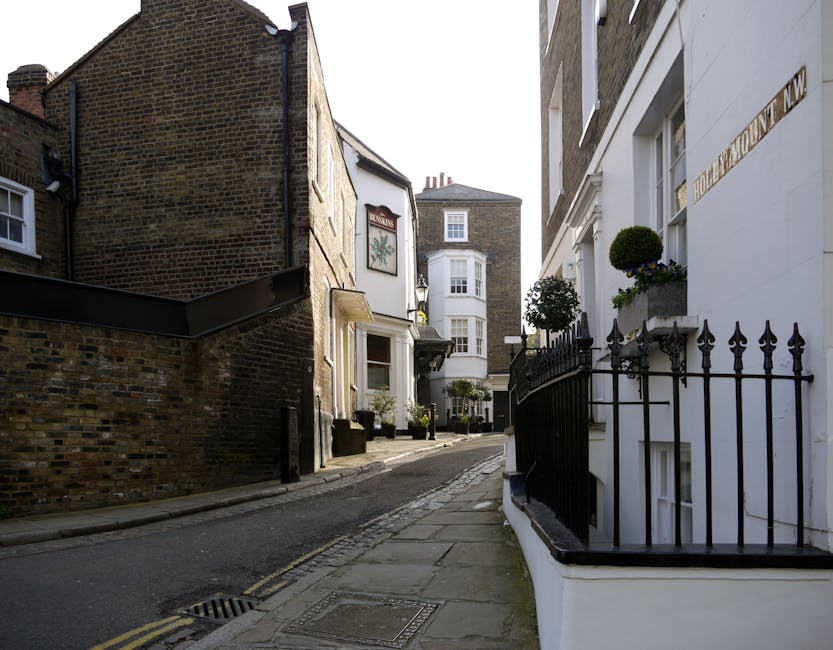
![A narrow residential street scene showing a Victorian-style house with a steeply pitched roof, multiple chimneys, and ornate brickwork, situated behind a decorative wrought iron gate attached to a brick wall. The house is partially obscured by lush green trees and bushes lining the street, which has a kerbside pavement. There are no visible vehicles or moving equipment in the image. This setting exemplifies a typical home environment where removals by [COMPANY_NAME] may involve careful furniture transport, packing, and loading processes, especially in tight access properties like this. The street sign reads 'BRANCH HILL N.W.3', indicating the location, and the lighting suggests daytime with clear weather. The image captures a peaceful scene relevant to house removals and the logistical considerations associated with narrow access properties, as handled by [COMPANY_NAME] specializing in residential moving services.](/pub/blogphoto/streatham-high-road-removals-for-narrow-access-properties1.jpg)
Why Streatham High Road removals for narrow access properties Matters
Streatham High Road is busy, active, and very much lived-in. That's part of its appeal. But it also means moving day can get complicated fast if the property has limited access. On a road like this, the challenge is not just lifting boxes. It's managing the street itself, the timing, the neighbours, the parking, and the physical layout of the building.
Narrow access properties are common in London, and Streatham is no exception. You'll see top-floor flats with tight staircases, maisonettes with narrow internal bends, terraced homes with limited front space, and converted buildings where every corner seems designed to test patience. A standard removal plan often assumes easy loading. A narrow-access move assumes nothing. That difference matters.
When access is tight, small mistakes become expensive or inconvenient. A van that is too large may block the road or simply not fit close enough to load safely. Poorly packed furniture may snag on doorframes. A rushed crew can damage walls, banisters, or the item itself. And let's face it, nobody wants to start their new chapter by repainting a hallway they didn't mean to scuff.
It also matters because narrow access moves are one of those situations where planning saves time in a very visible way. A move that feels smooth often looks calm from the outside, but usually that calm is doing a lot of work behind the scenes. That is the bit people don't always see.
Expert summary: For narrow access removals, the real win is not brute force. It's the combination of accurate assessment, compact transport, careful handling, and enough time on site to move things safely without panic.
If you're moving from a flat, a basement, or a house with awkward frontage, it's worth looking at dedicated services such as flat removals Streatham, house removals Streatham, and, where necessary, storage in Streatham for items that need to be held temporarily between addresses.
How Streatham High Road removals for narrow access properties Works
A well-run narrow-access move starts before the van arrives. The first stage is usually a quick but careful access review. That means checking the width of the doorway, hallway bends, stair turns, ceiling height, garden paths, gates, and any parking or loading constraints. In practice, this can be as simple as a phone consultation and a few photos, or as detailed as a walk-through if the property is especially awkward.
Once the access picture is clear, the move is planned around the property rather than forcing the property to fit a standard move. That might mean using a smaller van, splitting the load into several lighter runs, booking more time, or bringing specialist equipment for heavier or fragile pieces. A piano, for example, changes the whole tone of the job. If that sounds familiar, the dedicated piano removals Streatham service is the kind of thing you want to look at early, not halfway through lifting day.
On the day, the crew normally starts with protection. Door frames, floor surfaces, and corners may be wrapped or guarded. Items are then moved in a sequence that reflects the layout. In a tight stairwell, for instance, larger furniture may go first while everyone is fresh and coordinated. Smaller boxes and softer items can follow once the route is clear.
The vehicle choice matters too. A compact removal van or a man-and-van setup is often better suited to narrow access than a large lorry. The point is to reduce risk and improve manoeuvrability, not simply fill the biggest vehicle available. If you're comparing options, the pages for man with a van Streatham, man and van Streatham, and removal van Streatham give a useful sense of how compact moving support can fit tighter access.
There's also a planning layer for timing. On a busy stretch like Streatham High Road, off-peak hours can make a noticeable difference. Early starts, better parking availability, and less passing traffic all help. Nothing glamorous. Just sensible.
Key Benefits and Practical Advantages
The main benefit of a narrow-access-focused move is obvious: fewer problems at the point where problems tend to happen. But there are several other advantages that are easy to overlook until you've lived through a difficult move once.
- Reduced risk of damage: Smaller vehicles, better route planning, and careful handling mean fewer scrapes on walls, banisters, and furniture.
- Better time control: A move designed for the property usually runs more smoothly than one that is improvised on arrival.
- Less stress on the day: When everyone knows what can and can't fit, the job feels more manageable. Simple as that.
- Improved safety: Tight stairs and awkward turns are exactly where injuries happen if people hurry or lift badly.
- More realistic quoting: Honest access information helps avoid last-minute surprises and extra charges.
There's another practical advantage too: narrow-access planning tends to make the packing process better. If you know a wardrobe will need to be dismantled, or a large table won't clear a bend, you pack and prepare differently. That usually leads to less waste, less rushing, and fewer damaged items. It's a small shift, but it matters.
For some customers, the biggest advantage is simply confidence. If you live on the High Road and you've looked at your staircase with a sigh, a good moving plan replaces guesswork with a sequence you can actually trust. And honestly, that's worth a lot on moving week.
Where broader support is needed, it can help to compare removals Streatham with more specific support such as furniture removals Streatham or packing and boxes Streatham, depending on whether your main challenge is the load itself or the access route.
Who This Is For and When It Makes Sense
This type of service is especially useful if you live in or are moving to a property with limited physical access, and that can mean quite a few different situations. If your home has a narrow staircase, a tiny front path, no driveway, or a shared entrance with limited turning space, you're in the right place. Same if you're moving from a top-floor flat, a converted Victorian property, or a house with unusually tight interior dimensions.
It also makes sense for people moving on a tight schedule. If you need the job handled efficiently because the building has strict access hours, neighbour sensitivities, or parking restrictions, the move has to be tightly organised. Students often face this kind of challenge in flats and shared homes, which is why student removals Streatham can be a strong fit when access is awkward and the load is mostly boxes, bags, and a couple of bulky items.
Office moves can have narrow access issues too, particularly in older commercial buildings or mixed-use premises along the High Road. If a business address has service-lift limitations, stair-only access, or restricted loading bays, then office removals Streatham may need the same careful planning as a residential move.
It makes sense whenever you think, "This could go smoothly if someone planned it properly." That feeling is usually right.
Step-by-Step Guidance
Here's the cleanest way to approach a narrow-access move. It's not complicated, but the order matters.
1. Measure the access points
Start with the basics: front door width, internal door widths, staircase turns, ceiling height where needed, and any outdoor gates or side passages. If you have a large item, measure the item too, including handles, feet, and anything that sticks out. People forget the extra couple of centimetres all the time. That's where trouble starts.
2. Photograph the tricky bits
A few clear photos can be more useful than a long description. Take shots of the staircase, parking area, entrance, and any narrow corners. If the access looks tight to you, it probably is. The aim here is to help the removal team plan realistically rather than optimistically.
3. Sort items by difficulty
Put large, fragile, valuable, and awkward items into separate groups. A sofa, mattress, piano, glass cabinet, or large mirror may need a different handling plan from boxes and soft furnishings. This is also the stage where you decide what can be dismantled before move day.
4. Choose the right transport approach
For some homes, a compact vehicle is enough. For others, a more flexible setup is better, especially if several short trips are safer than one oversized load. A man and van Streatham option is often practical when access is tight and the move is relatively modest. For larger homes, a more structured service may still be better. It depends on volume, not pride.
5. Reserve parking and loading space where possible
On a road like Streatham High Road, access planning is not a nice extra. It's part of the job. Make sure the team knows where the van can stop, whether there are restrictions, and how long loading may take. If there's no clear parking option, mention that early. No drama, just facts.
6. Pack for the route, not just the destination
Use smaller boxes for heavy items, label boxes clearly, and avoid overfilling containers that need to pass through narrow doorways or stair bends. It sounds obvious, but the box packed by "one last thing" logic is often the one that causes the headache.
7. Build in a little buffer
Leave some time margin. Tight-access moves can still go well, but they rarely reward a schedule that assumes nothing will slow down. A ten-minute delay on paper can become half an hour in a real building, especially if neighbours are coming and going or traffic is stop-start.
8. Confirm the insurance and safety cover
Before the move, check what is covered in transit and during loading. A reputable mover should be able to explain the basics clearly. If that information is unclear, ask. If it stays unclear, that's a signal in itself.
Expert Tips for Better Results
Over the years, the smartest narrow-access moves have one thing in common: they're boring in the best possible way. No last-minute improvisation, no heroic lifting, no "we'll just see how it goes." Here are the habits that tend to save the day.
- Take the biggest item out of the equation first. If the sofa or wardrobe will not clearly fit, plan dismantling early instead of waiting until the van arrives.
- Use stronger labels than you think you need. In tight spaces, the more clearly marked a box is, the less time it spends being moved around unnecessarily.
- Keep a clear pathway in the property. Shoes, prams, recycling bags, and random bits near the door can be surprisingly disruptive.
- Protect corners and stair edges. A cheap cover can save a repair, and a repair is always more annoying than the cover.
- Ask about load sequence. The order matters. Heavier pieces first is often sensible, but only if the route is genuinely clear.
- Use storage if the move is staged. If dates don't line up, temporary storage can remove a lot of pressure.
One small, very human tip: have tea ready, or at least water. A move in a narrow building gets warm, and a ten-second pause to drink something cold can reset everyone. Sounds trivial. It isn't.
If you want to understand how the local moving market is positioned, you can also look at removal services Streatham for the broader service picture and removal companies Streatham when comparing providers.
Common Mistakes to Avoid
Most problems in narrow-access removals are avoidable. That's the annoying part, really. But it also means a little attention goes a long way.
First mistake: underestimating the access. A narrow-looking hallway is one thing; a hallway with a bend, a handrail, and a low light fitting is another. Measure everything, not just the front door.
Second mistake: booking a vehicle that is too large. Bigger is not always better. If the van cannot stop close enough, the team may end up carrying items further than necessary, which increases time and risk.
Third mistake: leaving dismantling until the day of the move. That can be manageable in an easy-access property. In a tight one, it can bring the whole operation to a standstill.
Fourth mistake: not warning about fragile or oversized items. If there's a mirror, a piano, a heavy bookcase, or a narrow stair landing, say so. No one enjoys finding that out during the lift.
Fifth mistake: ignoring the timing on Streatham High Road. Busy traffic, pedestrians, and parking pressure can make a standard plan feel rushed. A realistic time window helps everyone.
Sixth mistake: packing heavy boxes too large. This is the classic one. The box is technically moveable, but only in theory. In reality, it becomes the box everyone avoids. A bit of restraint here is your friend.
Tools, Resources and Recommendations
You do not need a van full of specialist kit to handle a narrow-access move well. But a few tools and habits make a noticeable difference.
- Furniture blankets and edge protectors: Useful for protecting walls, banisters, and furniture corners.
- Clear packing tape and proper labels: This keeps smaller loads organised and reduces confusion in tight rooms.
- Flat-pack tools: A basic screwdriver set and hex keys can save a lot of time when dismantling furniture.
- Work gloves and sturdy shoes: Simple, but important on stair-heavy moves.
- Smaller boxes for heavy contents: Books, crockery, and tools should not live in oversized cartons.
For customers who need extra support, it can be worth combining moving help with packing and boxes Streatham so the load is set up properly from the start. That often makes the access problem much easier to handle.
And if you're dealing with high-value items, awkward valuables, or a very delicate move, it's sensible to review the company's insurance and safety information before you commit. A little reading now saves awkward questions later.
You may also find local life and area guides helpful when timing your move. Streatham is a lively stretch, so the timing of loading and unloading can make a genuine difference. For a sense of the local setting, these reads are useful: what locals think about Streatham's livability and everyday life in Streatham.
Law, Compliance, Standards and Best Practice
For narrow-access moves, the key compliance issues are usually practical rather than complicated. You want safe lifting, sensible driving, property protection, and a clear understanding of what the mover is responsible for. In the UK, moving work should follow normal health and safety expectations, especially around manual handling and risk awareness. That doesn't mean every move needs a formal document pack on the kitchen table. It does mean the process should be organised enough to avoid preventable harm.
Best practice usually includes checking access in advance, planning the vehicle size carefully, protecting the property, and giving clear instructions to the crew. If a move involves tight staircases or awkward items, a well-run team will often choose a slower but safer method. That is not inefficiency. It's competence.
You should also expect straightforward communication on costs, terms, and what happens if access turns out to be more difficult than expected. Good providers make pricing and expectations clearer before move day, which is one reason it can help to review pricing and quotes and the terms and conditions in plain language before booking.
Where data handling or online booking is involved, standard privacy expectations also apply. If you're comparing companies, it doesn't hurt to check their privacy policy and, if relevant, the payment and security page too. Nothing flashy. Just sensible due diligence.
Options, Methods, or Comparison Table
The right removal method depends on access, load size, and how much flexibility you need on the day. Here's a simple comparison to help.
| Method | Best for | Strengths | Watch-outs |
|---|---|---|---|
| Man and van | Small to medium loads, tighter streets, flexible timing | Good manoeuvrability, often practical for limited access | May need more trips if volume is high |
| Removal van | Moderate loads with some access constraints | More space than a compact vehicle, still manageable | Can struggle where parking or road width is very limited |
| Full removals service | Larger homes, more furniture, complex logistics | Structured handling, more support, better for awkward inventories | Needs careful access planning to avoid delays |
| Storage plus staged move | Delayed completion dates or phased access | Reduces pressure and keeps the move flexible | Extra coordination needed |
In practice, people often start with one idea and end up with another. A homeowner may think they need a full-scale service, then realise a compact setup is enough because the access is the main issue. Or they may start with a small vehicle and realise, once the furniture list is complete, that they need a more comprehensive approach. Both are normal. It's why a decent consultation matters.
If you're not sure which route fits, a good first step is to review the general removals Streatham page and then decide whether your move leans more towards house removals Streatham, flat removals Streatham, or a compact option like man with a van Streatham.
Case Study or Real-World Example
Here's a realistic example. Imagine a third-floor flat just off Streatham High Road. The hallway is narrow, the stairwell turns sharply at the first landing, and the building has no lift. The customer has a sofa, two beds, a dining table, several boxes of books, and a large mirror. The road is busy, and parking is tight. Not a disaster. But not easy either.
A good plan would start with a photo review of the staircase and access points. The sofa might be measured and compared with the stair width, with the legs removed in advance. The table might be dismantled the night before. Boxes would be kept smaller than usual, with books split across multiple cartons rather than stacked into one heavy container. A compact van would be booked so loading can happen as close to the entrance as possible. If the mirror is fragile, it would be wrapped separately and loaded last or in a protected position.
On the day, the team would probably move the biggest item first while everyone is fresh and the route is clear. There may be a pause if another resident needs to pass, or if a parked car means the van has to be repositioned. That's normal. The move still succeeds because the plan allows for small interruptions.
What people often notice after a move like that is not speed, but calm. The day feels manageable. The building stays intact. The sofa fits. Funny how satisfying that is, really.
Practical Checklist
Use this before move day if you're dealing with a narrow-access property on or near Streatham High Road.
- Measure doors, stair turns, and any awkward corners.
- Photograph the access route from entrance to exit.
- Identify the largest items that may need dismantling.
- Book the right vehicle size for the property, not just the load.
- Confirm where loading can happen and whether parking may be restricted.
- Pack heavy items into smaller boxes.
- Label fragile and priority items clearly.
- Protect floors, corners, and stair edges.
- Check insurance, safety, and booking terms.
- Allow a time buffer for traffic, stairs, and repositioning.
- Arrange storage if completion dates do not line up.
- Keep essentials separately packed for easy access after arrival.
If your move is still in the early planning stage, you can also explore same day removals Streatham for urgent situations, though narrow access always benefits from as much notice as possible. Rushed and tight-access rarely make a happy pair.
Conclusion
Streatham High Road removals for narrow access properties are all about reducing friction before it turns into a problem. Measure carefully, choose the right vehicle, plan for the street as well as the building, and pack with the route in mind. When the access is tight, the move becomes less about power and more about precision.
The best outcomes usually come from simple habits: clear communication, realistic timing, sensible loading, and a team that understands how London properties really behave. Not every move needs drama. In fact, the best ones usually don't have any at all.
If you're comparing providers or want to talk through a narrow-access move in more detail, start by reviewing the relevant pages and then take the next step with confidence. A bit of planning now can save a lot of grief later, and that's worth doing properly.
Get a free quote today and see how much you can save.
And if you're still weighing up the wider service fit, it may help to revisit services overview or learn more about the company behind the service through the about us page. Small steps. Good steps.
![A narrow residential street scene showing a Victorian-style house with a steeply pitched roof, multiple chimneys, and ornate brickwork, situated behind a decorative wrought iron gate attached to a brick wall. The house is partially obscured by lush green trees and bushes lining the street, which has a kerbside pavement. There are no visible vehicles or moving equipment in the image. This setting exemplifies a typical home environment where removals by [COMPANY_NAME] may involve careful furniture transport, packing, and loading processes, especially in tight access properties like this. The street sign reads 'BRANCH HILL N.W.3', indicating the location, and the lighting suggests daytime with clear weather. The image captures a peaceful scene relevant to house removals and the logistical considerations associated with narrow access properties, as handled by [COMPANY_NAME] specializing in residential moving services.](/pub/blogphoto/streatham-high-road-removals-for-narrow-access-properties3.jpg)

